Gospel Reflection for Saturday in 2nd Week of Easter I am – do not fear
Fr Paul reads from the Gospel of John (6: 16-21) in which the disciples were in a boat on the lake during a [...]
Gospel Reflection for Friday in 2nd Week of Easter – Jesus provides the food we need
Fr Paul reads from the Gospel of John (6: 1-15) in which Jesus feeds a crowd of five thousand people who gathered to [...]
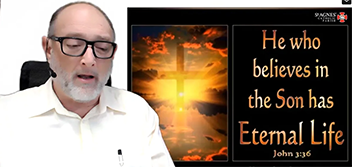
Gospel Reflection for Thursday in 2nd Week of Easter – Anyone who believes in the Son
Fr Paul reads from the Gospel of John (3: 31-36) in which John the Baptist says to his followers ‘the one whom God [...]
Gospel Reflection for Wednesday in 2nd Week of Easter – For God so loved the world
Fr Paul reads from the Gospel of John (3: 16-21) in which Jesus says to Nicodemus, ‘God loved the world so much that [...]
Gospel Reflection for Tuesday in 2nd Week of Easter – Nicodemus continues to learn from Jesus
Fr Paul reads from the Gospel of John (3: 7-15) in which Jesus tells Nicodemus he must be open to the Spirit so [...]
Gospel Reflection for Monday in 2nd Week of Easter – Jesus and Nicodemus (John 3: 1-8)
Fr Paul reads from the Gospel of John (3: 1-8) in which a man named Nicodemus, who was a member of the Jewish [...]
Gospel Reflection – Easter Saturday – Proclaim the Good News
Today Fr Paul Gooley reads from the Gospel of Mark (16: 9-15) in which, Jesus, when he appears to the Eleven tells them, [...]
Gospel Reflection – Easter Friday – Breakfast with Jesus
Today Fr Paul Gooley reads from the Gospel of John (21: 1-14) in which Jesus cooks breakfast for his friends on the shore [...]
Gospel Reflection – Easter Thursday – Jesus reveals himself
Today Fr Paul Gooley reads from the Gospel of Luke (24: 35-48) in which Jesus comes among the disciples and says to them, [...]
Gospel Reflection – Easter Wednesday – On the road with Jesus
Today Fr Paul Gooley reads from the Gospel of Luke (24: 13-35) in which two followers of Jesus were on the road to [...]
Gospel Reflection – Easter Tuesday – An act of faith (John 20: 11-18)
Today Fr Paul Gooley reads from the Gospel of John (20: 11-18) in which Mary, weeping outside the tomb of Jesus, does not [...]
Gospel Reflection – Easter Monday – Do not be afraid
Today Fr Paul Gooley reads from the Gospel of Matthew (28: 8-15) which tells what happened after the women discovered the empty tomb. [...]
Gospel Reflection for Easter Saturday Vigil – What are the Easter celebrations?
Rather than do his usual Gospel Reflection, Fr Paul will, again, today share information in relation to our Easter celebrations and then invite you to come and experience our Easter celebration and our Easter joy as we celebrate that Christ is risen. As he did on Holy Thursday and Good Friday, Fr Paul takes a little time to explain some of the special things that take place during our Easter ceremonies. Explanation & History The feast of the Resurrection of Christ is the greatest and oldest in the Church. Its importance has been emphasised liturgically by the long preparation for it, which we call Lent and Holy Week. The word ‘Alleluia’, a liturgical expression of praise, is now used again to express the Easter joy – Christ is risen. In the ancient church the people wanting to become catholic were baptised and they received holy communion on Easter Sunday after keeping vigil all Saturday night. The origin of the name ‘Easter’ is uncertain. However, it seems clear that, like Christmas, the Christian feast of Easter superseded an old pagan festival. The Easter Vigil Ceremony This is the principal celebration of Easter. It is traditionally observed during the night of Holy Saturday. There is clear evidence from the 2nd Century of a combined Good Friday/Easter ceremony and in the 4th Century that the two were separated and the Vigil ceremony developed, having the resurrection of Christ as its centre and reason for celebration. The basic pattern of the ceremony has remained virtually unchanged throughout the ages. The following details how we celebrate the Easter Vigil today: The Service of Light This part of the ceremony commemorates the resurrection of Christ – light of the world. In this part of the ceremony a fire is used to light the Easter (Paschal) Candle. The fire symbolises purification, newness and light. The candle is then prepared. It has on it a cross and the new year eg, 2023. At the top, it has the Greek letters Alpha (the beginning) and at the bottom it has the Omega (the end) symbolising to us that Jesus is the beginning and the end. Then five grains of incense are inserted into the candle to signify the wounds of Christ (each hand, the feet, the crown of thorns and the spear wound to the Lord’s side). With the candle prepared and lit the priest moves through the church declaring that ‘Christ is our light’. The people’s candles are lit from the Paschal Candle. Then the Easter Proclamation, the Exsultet is sung expressing our joy that Christ is risen, and we have been saved. The Liturgy of the Word The church meditates on all the wonderful things God has done for his people from the beginning of time. There are nine readings that are available for this part of the ceremony: The Old Testament readings include: One which tells the story of creation (Genesis 1:1-2;2) One which tells of Abraham’s sacrifice of Isaac, his only son (Genesis 22:1-18) One which tells of the exodus through the Red Sea (Exodus 14:15-15:1) And then four that tell of the prophecies of redemption (Isaiah 54:5-14. Isaiah 55:1-11. Baruch 3:9-15, 32-4:4. Ezekiel 36:16-28) The New Testament reading tells of Christ’s resurrection and our baptism (Rom 6:3-11) and the Gospel is one of the accounts of the resurrection. After the Liturgy of the Word comes the Liturgy of Baptism. Liturgy of Baptism New members of the church are welcomed by being baptised and confirmed and existing members of the church call to mind their own baptism by renewing their baptismal promises. This is done after the Litany and the blessing of the water. The water is used because it symbolises the fact that we need water to live and that it we use it to wash ourselves clean. It is the same with Christ. We celebrate that he died and rose from the dead so that we might have life and be cleansed of our sins. [...]
Gospel Reflection for Good Friday – About Good Friday
Fr Paul does not give his usual Gospel Reflection today but instead shares what Good Friday is about and invites us to come and join in remembrance of this special and solemn day. Explanation & History Good Friday is the Friday before Easter. It is the day on which the anniversary of the crucifixion of Jesus is kept. This day is a day of fast and abstinence. Along with Holy Saturday, these two days are the only two days of the year when mass is not celebrated. This celebration was started back in the early days of Christianity. It had three parts: 1. The reading of the Passion 2. The Veneration of the Cross 3. Communion It is relatively the same today. The Good Friday Ceremony The ceremony of Good Friday consists of three parts: The Liturgy of the Word The priest simply comes into the church. He will lie down on the floor if he is able to and immerse himself in prayer. After this, he faces the people and prays the opening prayer. Then there is a first and second reading and this is followed by the reading of the Passion. This reading is taken from John’s Gospel, and it is read to remind all of Christ’s death for us. After the reading of the Passion there are the General Intercessions that pray for the many needs of the church and our world. The Veneration of the Cross This part of the ceremony originated in the veneration of the true relics of the cross in Jerusalem. It was then celebrated in Rome and then it gradually spread to other churches that had no relics. In this part of the ceremony a cross is brought to the front of the sanctuary by the priest and the people venerate it by genuflecting, touching or kissing it. Communion Communion, which had been kept at the Altar of Repose, from the mass which was held on Holy Thursday is then distributed and after a prayer all depart in silence.
Gospel Reflection for Holy Thursday – Why do we celebrate Holy Thursday?
Today, Fr Paul does not give his usual Gospel Reflection but instead shares a little about the history and ceremony of Holy Thursday and invites us all to join in the unique and beautiful services we celebrate at Easter. Explanation & History The Holy Thursday ceremony is the first of ceremony of the Easter Triduum. It takes place on the Thursday before Easter. This ceremony commemorates the institution of the Eucharist by Jesus at The Last Supper. This ceremony was already celebrated by the 4th Century as it is mentioned in the Council of Hippo (393). The traditional name for Holy Thursday is Maundy Thursday. This name comes from the first antiphon of the ceremony of the washing of the feet. Since 1955 this ceremony has been celebrated in the evening when as many of the community can come. White vestments are worn. The Tabernacle is empty before the start of the mass because all are expected to receive the hosts consecrated at this mass. The bells are rung during the Gloria and then they will remain silent until Easter. The Holy Thursday ceremony has a number of parts that make it different from a normal mass. These are: Washing of the Feet In this part of the ceremony, which began to be celebrated around 694, twelve people come forward after the homily and have their feet washed. The washing of feet follows Christ’s example from the gospel. It ritualises the Christian ideal of a leadership of service; service which Christ expresses fully by laying down his life on the cross. The second thing that is different from a normal mass is the transfer of the Holy Eucharist. Transfer of the Holy Eucharist At the end of this mass the Blessed Sacrament is taken in a procession to another altar called the Altar of Repose, which is first mentioned in history in the 15th Century. The Blessed Sacrament will be used for communion on Good Friday when no mass is celebrated. In many places, the people stay after the ceremony and keep watch by taking turns praying before the Blessed Sacrament. On behalf of the Parish Community, Fr Paul warmly invites us all to join in this year’s Holy Thursday mass at 6pm this evening at St Agnes’ Church in Hay Street.
Gospel Reflection – Wednesday in Holy Week – According to the scriptures
Fr Paul Gooley reads from the Gospel of Matthew (26: 14-25) which commemorates the first part of the Last Supper, the preparation, and [...]
Gospel Reflection – Tuesday in Holy Week – The Last Supper
Fr Paul Gooley reads from the Gospel of John (13: 21-33, 36-38) which shares details of Jesus’s last meal with his disciples. Fr [...]
Gospel Reflection – John 12: 1-11 – An Act of Love
Holy Week began with Palm Sunday celebrations and today Fr Paul Gooley reads from the Gospel of John (12: 1-11) which tells the [...]
Gospel Reflection for Saturday – 5th Week of Lent – One to die for the people
Fr Paul reads from the Gospel of John (11: 45-56) in which the Chief Priests and Pharisees meet to decide what to do [...]
Gospel Reflection – John 10: 31-42 – To stone Jesus
Fr Paul Gooley reads today from the John (10: 31-42) in which the Jewish opponents picked up stones to stone Jesus. Fr Paul [...]
Gospel Reflection – Thursday 5th Week of Lent – I Am (John 8: 51-59)
Fr Paul Gooley reads today from the John (8: 51-59) in which Jesus says ‘whoever obeys my word will never see death’. Fr [...]
Gospel Reflection – Luke 1: 26-38 – The Annunciation of the Lord
Fr Paul Gooley reads from the Gospel of Luke (1: 26-38) in which Mary is greeted by the Angel Gabriel saying “Rejoice so highly [...]
Gospel Reflection for Tuesday – 5th Week Lent – Many fail to understand
Fr Paul reads from the Gospel of John (8: 21-30) in which Jesus tells the people about the Father but they fail to [...]
Gospel Reflection – John 8: 1-11 – Who is without sin
Fr Paul Gooley reads from the Gospel of John (8: 1-11) in which the scribes and the Pharisees bring a woman, who had [...]
Gospel Reflection – John 7: 40-52 – Who is Jesus?
Fr Paul Gooley reads from the Gospel of John (7: 40-52) in which the people disagree about who Jesus is; some say he [...]